India's creator economy has a number problem.
Not a shortage of numbers - the data is everywhere now. BCG, EY, Kofluence, Reelax, and a dozen other research firms have published their 2026 reports. Every headline tells you the market is booming. Very few of them tell you what that boom actually means for a creator with 15,000 followers in Lucknow or Surat or Coimbatore.
This post does exactly that. We take the real 2026 data - not the headline figures, but the specific numbers that matter to nano and micro creators - and translate them into practical conclusions about where the opportunity actually sits and how to get on the right side of it.
The headline numbers
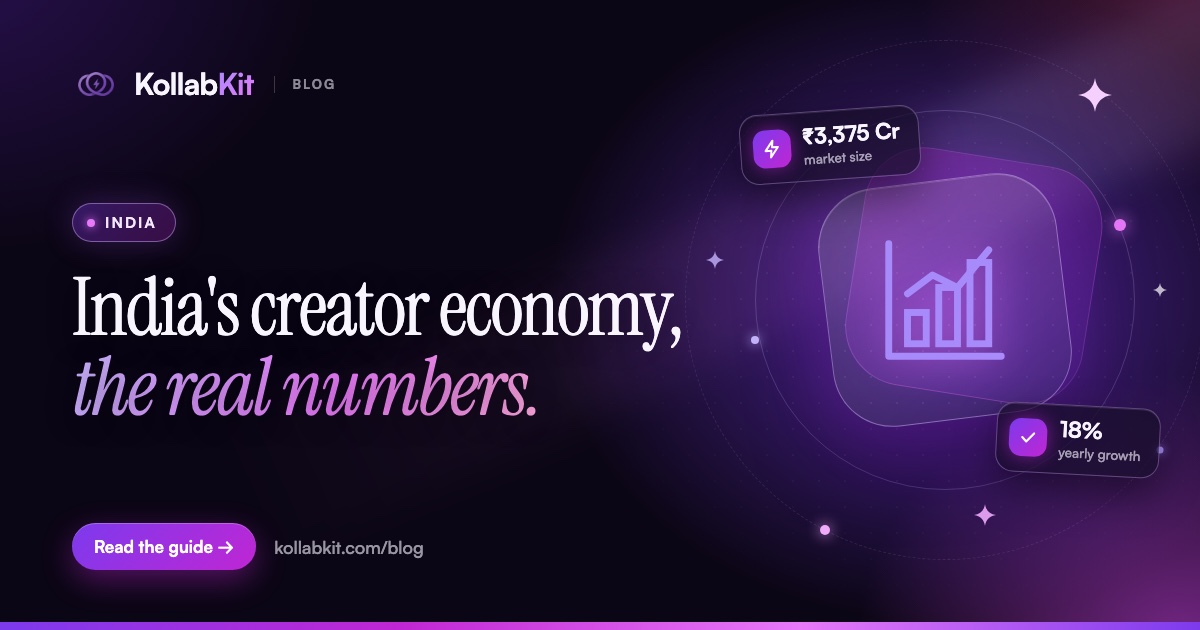
India's influencer marketing market is worth Rs 3,375 crore in 2026, according to EY's State of Influencer Marketing report. It is growing at 18% CAGR - faster than most sectors of the Indian economy, and faster than influencer marketing in most other markets.
But the more important number comes from BCG.
India's creator economy does not just generate Rs 3,375 crore. It influences over $350 billion - roughly Rs 29 lakh crore - in annual consumer spending. Creators in India are not a marketing channel. They are a purchasing infrastructure.
The India Creator Economy Market is valued at $15 billion in 2026 and projected to reach $61.87 billion by 2033, growing at 22.4% CAGR. For context - that growth rate is faster than Indian e-commerce, faster than digital advertising overall, and faster than most comparable markets globally.
What this means for you: the pie is genuinely large and genuinely growing. The macro conditions for building a creator business in India in 2026 are better than they have ever been.
The uncomfortable number
India now has 10 crore - 100 million - people who produce content on some platform, in some format, for some audience.
Only 8 to 10 percent of them monetise effectively.
That is the BCG finding that the headline reports buried. And it is the most important data point in this entire post.
The problem is not the market. The market is enormous and growing fast. The problem is that 90 percent of Indian creators are participating in the creator economy without converting that participation into meaningful income.
Why? Three reasons come up consistently across the research:
First - underpricing. Most Indian creators undercharge by 30 to 50 percent. They charge what feels comfortable, not what the market will pay.
Second - no verified data. Brands evaluate creators on engagement rate and average views - not follower count. Creators who cannot provide verified, live data lose deals to creators who can.
Third - pitching wrong. Most creators wait to be discovered. Brands want to be found.
Where the brand money is actually going
The EY report found that 47 percent of Indian brands prefer micro and nano creators for their cost-effective reach. In 2026 this has hardened into standard practice.
What does this mean in numbers?
Nano-influencers (under 10K followers) see average engagement rates of 6.23 percent on Instagram - far higher than macro-influencers at comparable follower counts in the same niche. A creator with 5,000 followers and 7 percent engagement is more attractive to most D2C brands than one with 100,000 followers and 1 percent engagement.
The influencer marketing industry is worth over $24 billion globally, and 40 percent of dedicated influencer marketing budgets go specifically to micro-influencers. In India, that proportion is higher because micro-creator CPMs are more competitive and their audience trust is more local.
The tier-2 and tier-3 shift
This is the 2026 data point that most creators outside the metros have not yet internalised.
According to the Reelax report, creator discovery searches by brands from outside metro India overtook metro searches for the first time in March 2026. Brand searches for creators outside the top eight metros more than doubled year on year. Discovery in Kannada, Marathi and Odia grew faster than in Hindi and English.
Regional micro-influencers deliver 2 to 3 times the engagement rate of metro macro influencers at roughly one-tenth the cost per post. That is exactly the trade a brand with a realistic marketing budget wants to make.
If you are posting in a regional language from a tier-2 or tier-3 city in 2026, that is not a disadvantage. It is the thing brands are actively searching for.
What the data says about niches
Not all creator niches are equal in 2026, and the gap between the highest-paying and lowest-paying niches is larger than most creators realise.
Finance and tech creators command 30 to 50 percent more per post than lifestyle creators at the same follower count, because their audiences demonstrate higher purchase intent for the brands advertising in those niches.
For Instagram brand deals, the niche premium is significant. Tech creators with 50,000 to 100,000 followers routinely earn Rs 20,000 to Rs 35,000 per Reel. Lifestyle creators at the same tier earn Rs 10,000 to Rs 18,000.
This does not mean you should pivot your content niche for money. It means you should understand the market value of your current niche and price accordingly using a tier-by-tier rate card.
The platform question - Instagram or YouTube?
The 2026 data gives a cleaner answer than previous years.
If your income model depends on brand deals: Instagram is your primary platform. Instagram is unbeatable for brand partnerships, especially in lifestyle, beauty, fashion, food and fitness.
If your income model depends on platform revenue: YouTube is your primary platform. YouTube pays creators through AdSense at RPMs of Rs 20 to Rs 150 per 1,000 views depending on niche, plus channel memberships, Super Chat, and YouTube Shopping. YouTube content also generates revenue for years after posting.
The most profitable Indian creators in 2026 are not choosing between the two. They are building an Instagram presence to close brand deals and a YouTube presence to build platform revenue.
What brands actually check before saying yes
The research on this is now very consistent across multiple 2026 reports.
Engagement rate, not follower count, is the primary evaluation metric. 68 percent of brands in 2026 prioritise engagement rate over follower count when selecting creators.
Beyond that, the evaluation goes to audience fit. Does the creator's audience geography, age group, and gender split match the brand's target customer?
And increasingly - verified data. Sophisticated Indian brands evaluate creators on average Reel views and engagement rate, not self-reported numbers. A creator who can provide live, verified stats from their Instagram gets the conversation. A creator who sends screenshots gets ignored or asked to send more information, which kills momentum.
The practical conclusion: the fastest way to get on the right side of the 2026 brand market in India is to make your verified data instantly accessible to brands.
What this all means if you are a creator in India right now
The market is large. It is growing faster than almost any other sector. Brands are actively moving budgets toward nano and micro creators. Tier-2 and tier-3 city creators are now being searched for by brands. The engagement rate premium for smaller creators is real and documented.
And yet 90 percent of creators are not converting this into consistent income.
The gap is not audience size. It is not content quality. The research is consistent on what separates the 8 to 10 percent who monetise effectively from the rest: they treat their creator presence as a business. They have verified data ready to share. They know what to charge. They pitch proactively instead of waiting.